How to Stop Overspending: Understand Your Spending Patterns
Learning how to stop overspending begins with understanding why you spend—not simply creating another budget. Emotional triggers, hidden beliefs, and automatic habits can influence your purchases even when you know you should be saving.
You may create a budget, promise yourself that this month will be different, and avoid unnecessary purchases for a while—only to find yourself spending again. Afterward, you may feel guilty, frustrated, or disappointed.
If this pattern sounds familiar, the problem may not be a lack of discipline. Why You Keep Overspending (And How to Stop) helps you look beneath your purchases and identify the patterns influencing your financial decisions.
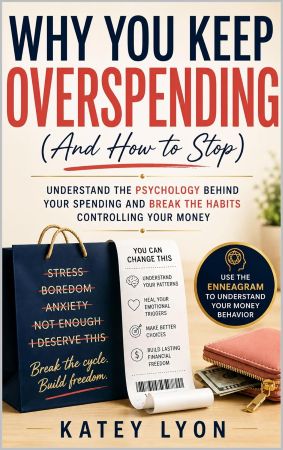
Why You Keep Overspending (And How to Stop) helps you look beneath the purchases and identify the patterns influencing your financial decisions.
How to Stop Overspending by Understanding Your Patterns
People overspend for many different reasons. A purchase might provide temporary comfort, excitement, recognition, control, or relief from stress.
Common reasons include:
- Shopping to improve your mood
- Spending impulsively when you feel stressed
- Buying things to impress or gain approval
- Finding it difficult to say no to other people
- Using purchases as a reward
- Avoiding bills or financial information
- Believing that a purchase will help you become a different person
- Spending because you feel restricted by a budget
- Buying something now because you fear missing the opportunity
These behaviors are not always conscious. You may understand perfectly well that you should spend less while still feeling pulled toward the same decisions.
That is why another budget may not be enough. A budget tells you how much you can spend, but it does not necessarily explain why you repeatedly exceed that amount.
The Problem May Not Be Your Budget—It May Be Your Pattern
Most financial advice concentrates on numbers:
- Create a budget
- Reduce unnecessary expenses
- Save a percentage of your income
- Avoid credit-card debt
- Track every purchase
These steps can be helpful, but knowing what to do does not guarantee that you will do it consistently.
If information alone solved overspending, everyone who understood budgeting would be able to follow a financial plan without difficulty.
Lasting change often begins with awareness. Before you can interrupt an automatic habit, you need to recognize what activates it and what emotional need it appears to satisfy.
The Connection Between Emotions and Spending
Spending can become a way of responding to uncomfortable emotions. Someone might shop when feeling lonely, bored, anxious, unappreciated, restricted, or uncertain.
The purchase may provide a short period of relief. However, when that feeling passes, the original emotion remains—and it may now be accompanied by regret or financial stress.
This can create a repeating cycle:
- An emotional trigger occurs.
- You feel an urge to spend.
- The purchase creates temporary relief or excitement.
- Guilt or worry appears afterward.
- You promise to be more disciplined.
- Another trigger restarts the pattern.
Breaking this cycle does not require criticizing yourself more severely. It requires understanding what happens between the emotional trigger and the purchase.
How the Enneagram Can Help You Understand Overspending
The Enneagram is a personality framework describing nine patterns of motivation, attention, fear, and behavior. It is best used as a tool for self-reflection rather than as a clinical assessment or financial diagnosis.
Instead of asking only, “What did I buy?” the Enneagram encourages you to explore deeper questions:
- What was I feeling before I made the purchase?
- What did I hope the purchase would give me?
- Was I looking for comfort, security, freedom, approval, or recognition?
- What belief made the purchase feel necessary?
- What pattern do I repeat when I feel stressed?
Different people can make the same purchase for completely different reasons. One person may buy something to receive approval, while another may buy it to feel successful. Someone else may spend impulsively because restrictions feel uncomfortable.
Understanding your motivation makes it easier to choose a response that addresses the real need.
Discover Your Spending Pattern
Why You Keep Overspending (And How to Stop) explores nine spending patterns connected with the Enneagram.
Depending on your dominant pattern, you may recognize tendencies such as:
The Perfectionist Spender
You may purchase items that promise to help you improve, become more organized, or finally do things correctly. You might also become discouraged when your financial plan is not perfect and abandon it after one mistake.
The People-Pleaser Spender
You may spend money on other people, give more than you can comfortably afford, or find it difficult to refuse requests. Generosity can be meaningful, but it becomes a problem when it is driven by fear of rejection or the need to feel valued.
The Image or Achievement Spender
Purchases may become connected with success, productivity, or the image you want other people to see. You may feel pressure to demonstrate that you are doing well, even when the spending creates financial stress.
The Emotional Spender
You may shop when you feel lonely, disappointed, misunderstood, or emotionally overwhelmed. The purchase can feel personally meaningful or provide a temporary change in mood.
The Security-Seeking Spender
Money decisions may be influenced by uncertainty or fear about the future. This can lead to inconsistent behavior, such as restricting spending severely and then making reactive purchases.
The Impulsive Spender
You may be attracted to novelty, excitement, special offers, or immediate experiences. Spending can feel like freedom in the moment, while future financial consequences seem distant.
The Control-Oriented Spender
Money may represent independence, influence, strength, or protection. Purchases and financial decisions can become ways of maintaining control or resisting limitations imposed by others.
The Avoidant Spender
You may delay checking balances, opening bills, or making financial decisions because they feel uncomfortable. Avoidance can make it difficult to see how many small purchases have accumulated.
These descriptions are examples rather than fixed labels. You may recognize more than one tendency, particularly during periods of stress.
The goal is not to put yourself in a box. It is to identify the pattern that helps explain your most persistent financial habits.
What You Will Discover in the Book
Why You Keep Overspending (And How to Stop) is not another collection of budgeting rules. It is a practical guide to understanding the emotional and behavioral side of spending.
Inside, you will explore:
- Why you continue overspending despite wanting to stop
- How emotions influence financial decisions
- The beliefs that may be keeping your habits in place
- The nine Enneagram spending patterns
- Your most common emotional and financial triggers
- The difference between a genuine need and an emotional urge
- Ways to pause before making an automatic purchase
- Practical steps for changing recurring spending behavior
- How to develop a calmer and more intentional relationship with money
The book is designed for readers who already know they should budget or save but want to understand why following that advice has been so difficult.
This Book May Be for You If…
This guide may be helpful if:
- You frequently wonder, “Why do I keep overspending?”
- You repeatedly make purchases you later regret
- You have tried budgets but struggle to follow them
- Shopping changes your mood temporarily
- You hide or minimize purchases
- You feel guilty after spending
- You spend to gain approval or avoid disappointing someone
- You make impulsive purchases when stressed
- You avoid reviewing your finances
- You want to understand the emotional reasons behind your habits
The book does not promise an instant solution. Instead, it provides a framework for recognizing your patterns and making more conscious decisions over time.
A Practical Pause Before Your Next Purchase
Before buying something that was not planned, try asking yourself:
- What am I feeling right now?
- What happened immediately before I wanted to buy this?
- What do I expect this purchase to change?
- Is this something I need, or am I trying to change how I feel?
- How will I feel about this purchase tomorrow?
- What could address the underlying need without spending?
The objective is not to make yourself feel guilty. It is to create enough space between the urge and the decision to choose intentionally.
The book expands upon this process with exercises connected to different personality and spending patterns.
Awareness Creates the Opportunity to Change
You do not necessarily need more criticism, shame, or rigid rules.
You need to understand the moment when an emotional trigger becomes a financial decision.
Once you can recognize the pattern, you can begin to interrupt it. You can pause before reacting, evaluate what you actually need, and choose a response that supports your longer-term priorities.
This is where meaningful financial change can begin.
Why You Keep Overspending (And How to Stop)
Understand the Psychology Behind Your Spending and Break the Habits Controlling Your Money
This book offers a different approach to overspending—one that focuses on self-awareness, emotional triggers, personality patterns, and practical change.
If you are ready to look beyond the budget and understand what is really driving your purchases, this guide can help you take the next step.
[View Why You Keep Overspending on Amazon]
Disclosure: This featured book is written by Katey Lyon, who is affiliated with Everyday Within. This website may earn a commission from qualifying purchases made through the Amazon link, at no additional cost to you.
Frequently Asked Questions
Why do I keep overspending even when I have a budget?
A budget establishes financial limits, but it may not address emotional triggers, automatic habits, or beliefs about money. Recognizing what happens immediately before an unplanned purchase can help you understand why the behavior continues.
Can emotional spending become a habit?
Yes. When shopping repeatedly provides temporary comfort, excitement, or relief, the brain may begin associating spending with emotional regulation. Recognizing the trigger and developing another response can help interrupt the cycle.
What is a spending trigger?
A spending trigger is a situation, feeling, thought, or environment that produces an urge to make a purchase. Examples may include stress, boredom, social comparison, conflict, special offers, or feeling that you deserve a reward.
How does the Enneagram relate to spending?
The Enneagram can be used as a self-reflection framework for examining motivations and recurring behavior. It may help someone consider whether spending is connected with approval, achievement, emotional comfort, security, freedom, control, or avoidance.
Is the Enneagram a psychological diagnosis?
No. The Enneagram is a personality and self-reflection framework, not a clinical or financial diagnostic tool. It should not replace personalized advice from a qualified mental-health or financial professional.
Can this book replace financial advice?
No. The book concentrates on awareness, emotional triggers, and behavioral patterns. It does not replace personalized financial, psychological, or medical advice.
This content is provided for general informational and educational purposes. Consider consulting an appropriate qualified professional if overspending is causing serious debt, emotional distress, relationship problems, or difficulty meeting essential expenses.
More Money Resources
Raise Your Financial Self Esteem
How Emotions Affect Your Finances: 4 Reasons Why People Overspend