
What Are the Effects of a Narcissistic Mother on Her Daughter?

The effects of a narcissistic mother on her daughter may continue into adulthood, influencing self-worth, confidence, emotional boundaries, and relationships. Some daughters develop patterns such as people-pleasing, perfectionism, guilt, self-doubt, or difficulty trusting their own feelings.
These experiences are not identical for everyone. Their effects can depend on the mother’s behavior, the daughter’s circumstances, and whether she received emotional support from other people while growing up.
The word narcissistic is often used to describe self-centered, controlling, or emotionally dismissive behavior. However, narcissistic traits are not necessarily the same as narcissistic personality disorder, which can only be diagnosed by a qualified professional. This article explores possible patterns without attempting to diagnose anyone.
Narcissistic Traits and Narcissistic Personality Disorder
According to the American Psychiatric Association, narcissistic personality disorder involves a persistent pattern of grandiosity, a need for admiration, and a lack of empathy that occurs in different situations.
A mother can display controlling, competitive, or emotionally dismissive behavior without having narcissistic personality disorder. One isolated disagreement or insensitive comment is also not enough to determine that someone has the condition.
Instead of attempting to assign a diagnosis, it is more helpful to examine recurring patterns of behavior and their effect on the daughter.
Behaviors Sometimes Associated With Narcissistic Parenting
Patterns that may appear in an emotionally unhealthy mother-daughter relationship include:
- Dismissing or minimizing the daughter’s emotions
- Using guilt to influence her decisions
- Blaming her for problems she did not cause
- Competing with her or diminishing her accomplishments
- Expecting constant praise, attention, or loyalty
- Ignoring personal and emotional boundaries
- Making affection or approval dependent on compliance
- Reacting negatively when the daughter becomes independent
- Presenting a positive public image while behaving differently in private
- Treating the daughter’s choices as a reflection of the mother
A mother might use phrases such as “You’re too sensitive,” “After everything I’ve done for you,” or “You’re just trying to get attention.” However, the surrounding circumstances and repeated behavior matter more than any individual phrase.
You may also want to read What Is a Narcissistic Mother? Recognizing the Signs.
10 Possible Effects of a Narcissistic Mother on Her Daughter
The following patterns can have many different causes and are not proof that someone has a narcissistic mother. Nevertheless, some adult daughters recognize several of these experiences in their own lives.
1. Low Self-Worth
A daughter who frequently receives criticism, comparison, or conditional approval may begin to believe that her value depends on pleasing other people.
Even when she receives praise, she may struggle to accept it or feel that she has done enough. She might rely heavily on external validation because she did not receive consistent emotional encouragement while growing up.
Developing a more stable sense of worth can involve recognizing personal strengths, questioning internalized criticism, and learning that acceptance does not have to be earned through constant achievement.
Read more about characteristics associated with low self-esteem.
2. Perfectionism
Some daughters learn that mistakes lead to criticism, withdrawal, humiliation, or disappointment. They may respond by trying to perform perfectly at school, at work, or in relationships.
Perfectionism can create the temporary feeling of being in control, but it can also lead to anxiety, procrastination, exhaustion, and fear of failure. The daughter may feel that an ordinary mistake proves that she is inadequate.
Learning to tolerate imperfection and establish realistic expectations can help weaken this pattern.
Learn more about overcoming perfectionism.
3. People-Pleasing
A daughter may learn to monitor her mother’s emotions and adjust her behavior to prevent anger, disappointment, or conflict. In adulthood, this can develop into people-pleasing.
She may agree to requests she does not want to accept, suppress her opinions, or feel responsible for keeping everyone happy. Saying no may produce guilt or fear, even when the request is unreasonable.
Recognizing that other adults are responsible for managing their own feelings is an important part of developing healthier relationships.
4. Difficulty Setting Boundaries
If privacy, independence, or personal choices were not respected while growing up, boundaries may feel unfamiliar or unsafe.
An adult daughter might disclose more than she wants to, tolerate intrusive behavior, or feel guilty when asking for space. Alternatively, she may create extremely rigid boundaries because emotional distance feels safer than vulnerability.
Healthy boundaries communicate what a person will accept, what she needs, and how she will respond when a limit is not respected. They are not a punishment or an attempt to control someone else.
5. Self-Doubt and Difficulty Trusting Her Perceptions
Repeatedly being told that she is too sensitive, confused, selfish, or mistaken can cause a daughter to question her own reactions.
As an adult, she may seek reassurance before making decisions or wonder whether her feelings are valid. She might also explain or defend ordinary choices because she expects them to be challenged.
Keeping a journal, pausing before asking for reassurance, and identifying personal values may help her reconnect with her judgment.
6. Shame and Excessive Guilt
Guilt relates to something a person has done, while shame can create the deeper belief that something is fundamentally wrong with her.
A daughter who was regularly blamed or criticized may carry guilt for situations she did not cause. She may feel selfish for resting, succeeding, enjoying her life, or making choices that her mother dislikes.
Learning to distinguish genuine responsibility from learned guilt can help her respond to these feelings more fairly.
7. Fear of Success or Self-Sabotage
If a mother reacted competitively to her daughter’s accomplishments, the daughter may learn that success creates conflict or threatens important relationships.
Later, she may minimize her abilities, abandon opportunities, procrastinate, or remain in situations that do not allow her to grow. This does not necessarily mean that she consciously wants to fail. Holding herself back may have become a way to avoid criticism, rejection, or unwanted attention.
Understanding self-sabotaging behavior can make this pattern easier to recognize.
8. Trust and Relationship Difficulties
Inconsistent affection, broken promises, manipulation, or emotional unpredictability can affect how a daughter approaches other relationships.
She may have difficulty trusting people, become highly sensitive to rejection, or remain emotionally guarded. Some daughters repeatedly seek approval from unavailable people because the dynamic feels familiar.
Others may avoid closeness altogether. These reactions can be protective patterns rather than personal failures.
9. Difficulty Identifying and Expressing Emotions
When a child’s emotions are repeatedly dismissed, she may learn to hide them or believe they are inconvenient.
As an adult, she might struggle to identify what she feels, communicate her needs, or recognize when she is becoming overwhelmed. She may also concentrate on everyone else’s emotions while ignoring her own.
Developing an emotional vocabulary and noticing physical sensations connected with feelings can support greater emotional awareness.
10. Anxiety, Hypervigilance, or Fear of Conflict
Growing up around unpredictable criticism or emotional reactions may lead a daughter to remain alert for signs of trouble.
She may analyze changes in someone’s tone, avoid disagreement, rehearse conversations, or worry that a minor mistake will cause a major conflict. Even in safer relationships, her body may continue responding as though she must be prepared for someone’s reaction.
Grounding practices, supportive relationships, and professional counseling may help when these reactions interfere with everyday life.
Can the Pattern Affect Her Own Parenting?
An adult daughter may worry that she will repeat the behavior she experienced. Having that concern does not mean she will automatically become the same type of parent.
Self-awareness can provide an opportunity to make different choices. She can learn to listen to her children, apologize after mistakes, respect age-appropriate boundaries, and allow them to develop identities separate from her own.
A therapist or parenting professional can also help someone explore patterns from childhood without assuming that those patterns determine her future.
What Can Help an Adult Daughter?
Recovery does not require proving that a mother has a particular diagnosis. A daughter can acknowledge the effect of hurtful behavior and make decisions based on what supports her well-being now.
Helpful steps may include:
- Naming recurring patterns without minimizing them
- Identifying personal needs and values
- Practicing small, consistent boundaries
- Reducing unnecessary explanations and justifications
- Challenging beliefs based on shame or conditional approval
- Building relationships in which feelings and limits are respected
- Writing down events when self-doubt makes them difficult to evaluate
- Seeking help from a qualified mental-health professional when needed
Psychotherapy can help people work through emotional challenges, identify recurring patterns, and develop healthier ways of responding. The American Psychiatric Association explains how psychotherapy works.
A Guided Resource for Adult Daughters
Adult Daughters of Narcissistic Mothers — Katey Lyon
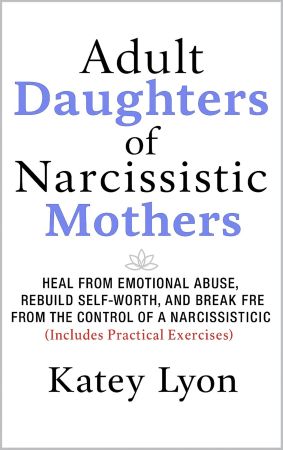
Adult Daughters of Narcissistic Mothers explores emotional abuse, self-worth, boundaries, guilt, and recurring patterns that some daughters experience.
It also includes practical reflection exercises intended to help readers understand their experiences and begin developing healthier responses.
Disclosure: This featured book is written by Katey Lyon, who is affiliated with Everyday Within. The website may also earn a commission from qualifying purchases made through the Amazon link.
Understanding the effects of a narcissistic mother on her daughter can help an adult daughter recognize patterns involving low self-worth, perfectionism, guilt, boundaries, and trust. Recognizing these patterns is not about blaming someone for every present-day difficulty. It is about understanding how earlier experiences may continue to influence current choices.
A daughter is not permanently defined by the relationship she had with her mother. With self-awareness, supportive relationships, appropriate boundaries, and professional help when needed, she can develop a stronger sense of identity and choose healthier ways of relating to herself and others.
You May Also Like
- What Is a Narcissistic Mother? Recognizing the Signs
- Impact of a Narcissistic Father on His Children
- 7 Signs of Toxic Narcissistic Parenting
This article is provided for general informational purposes and is not intended to diagnose any person or replace professional mental-health advice. If these experiences are causing significant distress or affecting your daily life, consider speaking with a qualified mental-health professional.
One response
Comments are closed on this article.